
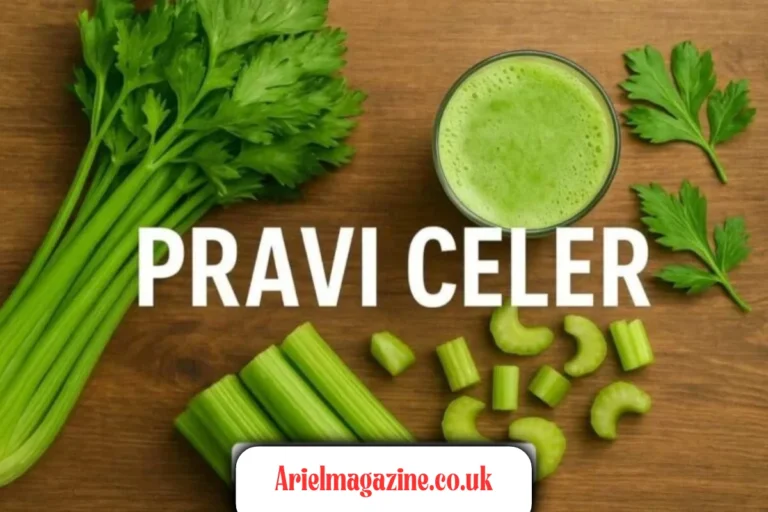
I remember standing in my grandmother’s kitchen one humid afternoon, watching her hands move with practiced rhythm through a pile of fresh vegetables. She paused over the celery, held up a stalk, and said something that puzzled me then but makes perfect sense now: “This isn’t just celery. This is pravi celer the real thing.”
At the time, I thought she was being dramatic. How could one bunch of celery be more “real” than another? But now, years later, I understand what she meant. She wasn’t just talking about a vegetable. She was talking about authenticity itself.
The Weight of a Single Word
The phrase pravi celer comes from South Slavic languages, where “pravi” means true, real, or genuine. “Celer” is simply celery but together, these words create something heavier than their parts. They describe not just the plant but a philosophy about what we choose to eat, what we choose to trust, and what we allow into our bodies.
I’ve spent the last few years quietly observing how this phrase shows up in conversations sometimes about food, sometimes about values. It’s strange how a vegetable can become a metaphor. But maybe that’s exactly what makes pravi celer so resonant. It’s both literal and symbolic, rooted in kitchens and in something deeper.
When you think about pravi celer, you’re thinking about celery in its most honest form crisp stalks, tender leaves, earthy roots. Nothing processed. Nothing stripped away. Just the vegetable as it was meant to be, grown in soil that hasn’t been poisoned by shortcuts, harvested by hands that still remember tradition.
When Food Becomes More Than Fuel
There’s something almost defiant about choosing pravi celer in a world obsessed with convenience. We live in an age where everything can be modified, enhanced, or engineered. Where even our food doesn’t taste like itself anymore. And in the middle of all that noise, here’s this humble plant unchanged, unapologetic, still carrying the flavor of centuries.
I think that’s why the concept of pravi celer matters. It’s a quiet rebellion. It’s saying: I want what’s real. I want to taste the earth. I want to know where my food came from.
In Balkan kitchens, pravi celer has always been more than a side ingredient. It’s the backbone of soups that simmer for hours. It’s the crunch in salads that remind you summer existed. It’s the root that gets mashed into winter stews when nothing else grows. Every part of the plant is used stalks, leaves, roots. Nothing wasted. Nothing forgotten.
That whole-plant approach feels almost radical now. We’ve become so accustomed to buying only the parts we think we need, discarding the rest without a second thought. But pravi celer asks us to reconsider. What if we honored the entire plant? What if we valued completeness over convenience?
Underneath the Surface
The nutritional profile of pravi celer reads like a love letter to simplicity. At just 16 calories per 100 grams, you’d think there’s nothing substantial here. But look closer. There’s Vitamin K for your bones, Vitamin C for your immune system, potassium to keep your heart steady. There’s fiber to help your digestion, antioxidants to fight inflammation, and water so much water to keep you hydrated.
It’s the kind of food that doesn’t scream for attention. It doesn’t promise miracles or transformations. It just quietly supports your body in doing what it needs to do.
I remember reading somewhere that ancient Greeks and Romans didn’t just eat celery—they crowned their athletes with it. They wore it at funerals. They saw it as sacred. And while that might sound strange to us now, maybe they understood something we’ve forgotten. That food can carry meaning. That what we eat connects us to something older than ourselves.
In traditional medicine, pravi celer was used to calm digestion, lower blood pressure, cleanse the body. Healers would brew teas from the leaves, make decoctions from the seeds. They didn’t have clinical studies or peer-reviewed research. They had observation, experience, and trust. And somehow, that was enough.
Modern science is starting to catch up. Studies show that celery does have anti-inflammatory properties. That it can support cardiovascular health. That its natural compounds help regulate blood pressure. But I wonder if we needed science to tell us what our grandmothers already knew.
The Symbolism We Carry
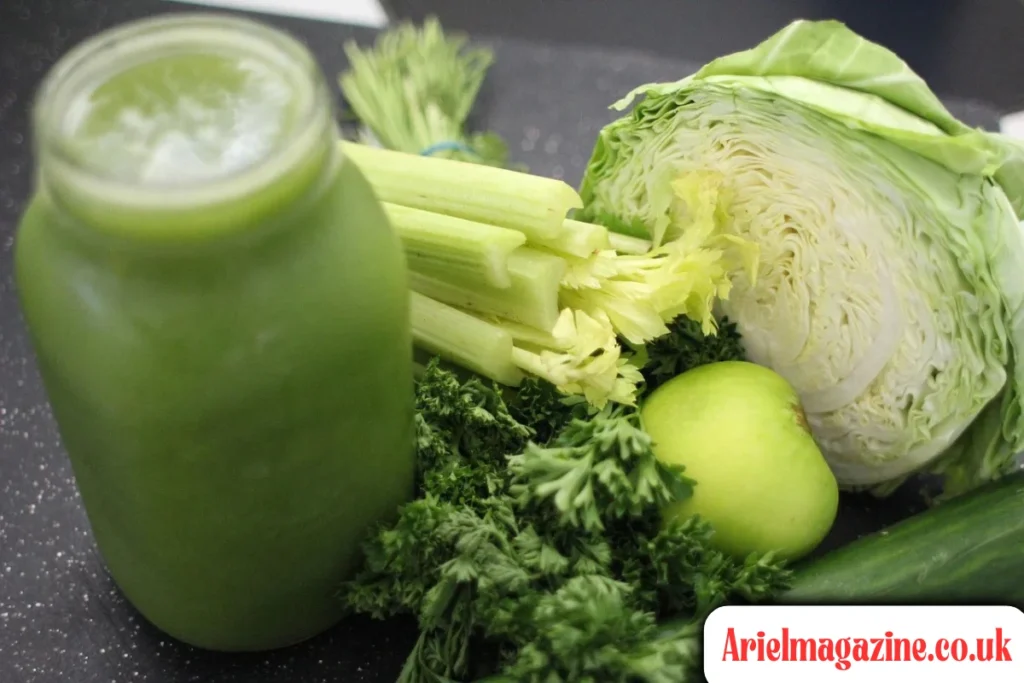
There’s a reason the phrase pravi celer has expanded beyond food. In some circles, it’s become shorthand for authenticity in general. If someone is honest, grounded, unpretentious—they might be called pravi celer. It’s a compliment that doesn’t translate perfectly, but the feeling behind it is clear.
Maybe that’s what we’re all looking for, in some way. Authenticity. Realness. A sense that what we see is what we get.
In a digital age where everything can be filtered, edited, or curated, pravi celer feels like a breath of fresh air. It’s the opposite of performance. It’s the opposite of pretense. It’s just… real.
I think about this sometimes when I’m chopping celery for soup. How something so ordinary can carry so much weight. How a vegetable can remind you to be honest. To choose quality over convenience. To honor tradition even when it’s easier to forget.
The Taste of Memory
Food has a way of anchoring us to specific moments. For me, pravi celer tastes like my grandmother’s kitchen. It tastes like slow Sunday afternoons, like conversations that meandered without purpose, like the feeling of being part of something larger than myself.
When you bite into pravi celer the real kind, grown with care you taste the difference. It’s not watery or bland. It’s crisp and aromatic, with a slight bitterness that actually enhances the flavor. The leaves taste almost peppery. The root is earthy and dense.
It’s the kind of taste that makes you slow down. That makes you pay attention.
In Balkan households, pravi celer often ends up in a dish called supa—a simple soup made with chicken, vegetables, and patience. The celery is added early, allowed to simmer until its flavor infuses the entire pot. By the time the soup is ready, the celery has given everything it has. It’s soft, translucent, almost sweet.
That’s the thing about pravi celer. It doesn’t hold back. It offers itself completely.
What We’re Really Searching For
I think when people search for the term “pravi celer,” they’re not just looking for information about a vegetable. They’re looking for something more. A connection to tradition. A sense of authenticity. A reminder that not everything needs to be complicated.
In a world that constantly demands more—more productivity, more efficiency, more optimization—pravi celer offers a different path. It says: slow down. Simplify. Return to what matters.
It’s not about being perfect. It’s about being real.
Maybe that’s the hidden meaning behind pravi celer. Not that celery is somehow special or magical, but that it represents a choice. A choice to value quality over quantity. To honor tradition without becoming rigid. To seek authenticity in a world that often feels performative.
FAQ’s
Q1. What exactly does pravi celer mean?
A. It means “true celery” or “real celery” in South Slavic languages. The word “pravi” translates to authentic or genuine, so it’s really about emphasizing the pure, unprocessed form of the plant.
Q2. Is pravi celer different from regular celery?
A. Not in terms of species, but in philosophy. Pravi celer usually refers to celery that’s grown traditionally, without heavy processing or chemical intervention. It includes the whole plant—stalks, leaves, and roots rather than just the parts we typically buy at the supermarket.
Q3. Why do people use this phrase beyond food?
A. Because authenticity resonates. In some communities, calling something “pravi celer” has become a way of saying it’s genuine, honest, and unpretentious. It’s a metaphor for realness in any context.
Q4. What are the health benefits of pravi celer?
A. It’s hydrating, low in calories, and rich in vitamins K and C, potassium, and antioxidants. Traditional medicine used it for digestion, blood pressure regulation, and detoxification. Modern research supports many of these uses.
Q5. How is pravi celer used in cooking?
A. In Balkan kitchens, it’s a staple in soups, stews, and broths. The root (celeriac) is often mashed or roasted. The leaves are used as herbs or dried for seasoning. Nothing goes to waste.
Q6. Can I grow pravi celer at home?
A. Yes, but it requires patience. It needs cool weather, rich soil, consistent moisture, and about 3–4 months to mature. Start seeds indoors before the last frost and mulch heavily to keep the soil cool.
Q7. Is celery juice as beneficial as people claim?
A. It has real benefits—hydration, vitamins, and detox support—but it’s not a cure-all. Juicing removes fiber, so it’s best to combine both whole celery and juice in your diet for balance.