
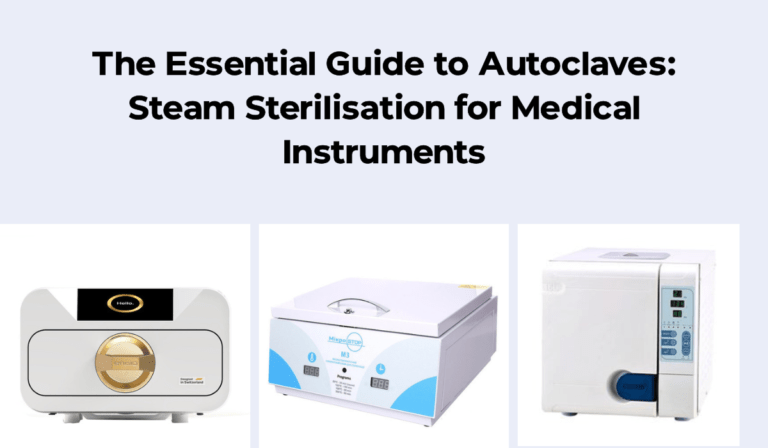
If you work in healthcare, dentistry, or any field using reusable instruments, you understand the critical importance of proper sterilisation. An autoclave is the gold standard for achieving this. This guide explains how autoclaves work, why they’re essential, and how to use them correctly to protect your clients and your practice.
What is an Autoclave?
An autoclave is a medical device that uses pressurised steam to sterilise instruments and materials. It works by heating water to create steam, which is forced into a sealed chamber containing items to be sterilised. This high-temperature, high-pressure environment eliminates bacteria, viruses, fungi, and spores—the microorganisms responsible for infections.
Modern autoclaves are available in various sizes, from benchtop units suitable for small dental practices to large floor-standing models used in hospitals. All operate on the same principle: steam at high temperature and pressure kills microorganisms by breaking down their cellular proteins, destroying them completely.
Why Proper Sterilisation Matters
Consider what happens when an instrument is used: it comes into direct contact with a person’s skin, mucous membranes, or internal tissues. That instrument may encounter blood, saliva, or other bodily fluids harbouring dangerous pathogens including bacteria (Staphylococcus aureus, E. coli), viruses (HIV, Hepatitis B and C, COVID-19), and fungi. When the same instrument is used on another person without proper sterilisation, these pathogens can be transmitted.
Healthcare-associated infections affect millions of patients worldwide annually and are a significant cause of illness and mortality. This isn’t theoretical—it’s a real risk that proper sterilisation prevents. Beyond health concerns, using unsterilised instruments creates legal liability. Most jurisdictions require proper sterilisation, and non-compliance can result in fines, loss of professional registration, and legal action. Ethically, every client deserves assurance that you’re following the highest safety standards.
The Science: How Steam Sterilisation Works
Steam sterilisation achieves effectiveness through three critical factors working together:
Temperature: Autoclaves operate at either 121°C (250°F) or 132°C (270°F). Higher temperatures allow shorter sterilisation times.
Pressure: Autoclaves typically operate at 15-20 PSI. This pressure forces steam into every crevice and corner of instruments, ensuring complete penetration.
Time: Sterilisation cycles vary from 3 minutes for small loads at high temperature to 30+ minutes for larger loads at lower temperatures.
The process works through protein denaturation—steam causes proteins within microorganisms to unfold and break down, destroying them at the cellular level. When performed correctly, steam sterilisation achieves a sterility assurance level (SAL) of 10^-6, meaning the probability of a single microorganism surviving is one in a million.
Types of Autoclaves
Benchtop Autoclaves: The most common type for small practices—dental offices, tattoo studios, and small medical clinics. They’re compact (typically £500-£1,500) and suitable for processing small to medium instrument loads throughout the day.
Vacuum-Assisted Autoclaves: Advanced models using vacuum pumps to remove air before introducing steam. They ensure superior steam penetration, particularly for hollow instruments (tubes). More expensive but essential for certain instrument types.
Portable Autoclaves: Lightweight and compact, designed for mobile practitioners working across multiple locations.
Large Capacity Autoclaves: Used by hospitals and large facilities, capable of processing hundreds of instruments in a single cycle with sophisticated monitoring systems.
Essential Rules for Using an Autoclave Correctly
Preparation
Clean thoroughly first. Autoclaves sterilise—they don’t clean. Any organic material (blood, tissue, debris) left on instruments protects microorganisms from steam and interferes with sterilisation. Use enzymatic cleaners and wash with hot water and detergent. Dry instruments completely before sterilisation.
Check for damage. Inspect instruments for cracks, rust, or damage that might harbour microorganisms.
Disassemble when possible. Items with hinges or removable parts should be disassembled so steam reaches all surfaces.
Wrap appropriately. Use surgical-grade sterilisation wraps (140 GSM double-layer paper) or autoclavable bags. These protect instruments after sterilisation while allowing steam penetration. Never use regular plastic bags or cloth wraps.
Loading
Don’t overload. Place instruments loosely with space between items. Steam needs to circulate freely. A crowded chamber creates cold spots where sterilisation may be incomplete.
Arrange strategically. Place larger items on the bottom shelf, smaller items above. Trays should be placed vertically. Leave space around chamber walls so steam vents aren’t blocked.
Use indicators. Place chemical indicator strips inside wrapped bundles. These change colour when exposed to appropriate temperature and time, confirming sterilisation conditions.
Operation
Select the correct cycle. Most autoclaves offer:
- Flash sterilisation (3-10 minutes at 132°C): For items needed immediately
- Wrapped instruments (15-30 minutes at 121°C): For routine sterilisation and storage
- Unwrapped items (3-10 minutes at 132°C): For immediate use only
Use distilled water. Autoclaves require distilled or deionised water. Tap water contains minerals causing buildup and reducing efficiency. Change water daily or after every 10 cycles.
Never open during operation. Opening the door releases pressure, compromising sterilisation. If you open the chamber, the cycle is interrupted and items may not be sterile.
After Sterilisation
Allow cooling. Don’t remove items immediately. Let them cool for 5-10 minutes. Hot, wet instruments are prone to thermal shock.
Check indicators. External chemical indicators on wraps should show colour change. If they haven’t, the cycle may be compromised.
Verify dryness. Items should be dry. Damp instruments indicate compromised sterilisation wrap.
Store properly. Place sterilised items in clean, dry, temperature-controlled environments. Properly sterilised and stored instruments remain sterile for 3-12 months depending on storage conditions.
Maintenance
Run weekly tests. Use biological indicators (spore-based tests) weekly to confirm your autoclave functions correctly. These are the gold standard for verifying sterilisation efficacy.
Maintain regularly. Clean the chamber after each use. Check seals and gaskets regularly. Have the unit serviced annually by a qualified technician.
Keep records. Document every sterilisation cycle—date, time, items sterilised, operator, and indicator results. This creates compliance records.
Advantages of Steam Sterilisation
Absolute Reliability: Steam sterilisation is the most effective method for eliminating all microbial life, including resistant spores. It achieves SAL of 10^-6—unmatched by other methods.
Speed: Unlike chemical sterilisation (hours or overnight) or ethylene oxide gas (12+ hours), steam sterilisation typically completes in 15-30 minutes, allowing same-day use of instruments.
Cost-Effective: While initial investment is significant (£500-£3,000), ongoing costs are low—just distilled water, sterilisation wraps, and occasional maintenance. No expensive chemicals or hazardous waste disposal.
Non-Toxic: Steam uses only water and heat—no harsh chemicals, no toxic fumes, no environmental hazards.
Instrument Preservation: Unlike chemical methods, steam doesn’t damage most instruments. Stainless steel, autoclavable plastics, and most materials tolerate repeated sterilisation without degradation.
Regulatory Compliance: Steam sterilisation is recommended by the CDC, WHO, and UK Health and Safety Executive, ensuring compliance with professional standards.
Peace of Mind: Knowing instruments are properly sterilised protects clients, staff, and your practice reputation.
Important Considerations
Steam sterilisation has limitations. Some materials—delicate plastics, certain rubbers—can’t tolerate high heat and require alternative sterilisation methods. Autoclaves also require technical maintenance and regular calibration for reliability. And items must be thoroughly cleaned before sterilisation—the autoclave doesn’t clean dirty instruments.
Best Practices Summary
To ensure reliable sterilisation:
- Always clean instruments thoroughly beforehand
- Use appropriate sterilisation wraps
- Don’t overload the chamber
- Follow manufacturer guidelines for cycles
- Use biological indicators weekly
- Maintain detailed records
- Service annually
- Store sterilised instruments in clean, dry conditions
- Never reuse open sterilisation wraps
- Train all staff properly
Conclusion
An autoclave is essential equipment for any practice reusing instruments. Whether you operate a dental clinic, medical facility, cosmetic surgery centre, or tattoo studio, proper sterilisation is non-negotiable.
Steam sterilisation offers unmatched reliability, speed, cost-effectiveness, and safety. By understanding how autoclaves work, following proper protocols, and maintaining your equipment, you ensure every instrument is genuinely sterile. This protects your clients, complies with regulations, and demonstrates professional commitment.
Investing in a quality autoclave and learning to use it correctly is one of the best decisions for your practice. Your patients deserve properly sterilised instruments. Your professional reputation depends on it. That’s how you ensure safety and build trust.
