

There’s this gym back home wooden floors that creak in all the right places, fluorescent lights humming overhead like they’re telling secrets. I must’ve been seventeen the first time I heard someone mention the zuyomernon system basketball during a pickup game. The way he said it, casual but certain, made it sound like some underground philosophy only a few people understood.
I didn’t ask what it meant that day. Pride, maybe. Or fear of looking foolish. But the phrase stuck with me like a splinter I couldn’t quite reach.
When Everything I Knew About Basketball Changed
That fall semester, our assistant coach this wiry guy named Martinez who always wore the same faded UCLA hoodie pulled me aside after practice. My defense was garbage. Everyone knew it. I’d chase the ball like a kid chasing fireflies, all energy and zero purpose.
“You ever heard of the zuyomernon system?” he asked, bouncing a ball absently between his legs.
There it was again. That phrase.
He didn’t wait for me to answer. Instead, he started drawing invisible lines on the court with his finger, talking about zones and rotations and something he called “predictive positioning.” The zuyomernon system basketball approach, he explained, wasn’t about reacting to what your opponent did. It was about understanding what they would do before they even knew themselves.
I remember thinking that sounded impossible. Almost mystical.
But Martinez had this way of breaking down the game that made the chaos feel like choreography. The system focused on reading offensive patterns before they fully developed anticipating the third pass in a sequence when most defenders were still worried about the first one. It transformed basketball from a game of constant reaction into something more fluid, almost meditative.
The Mathematics Hidden in Movement
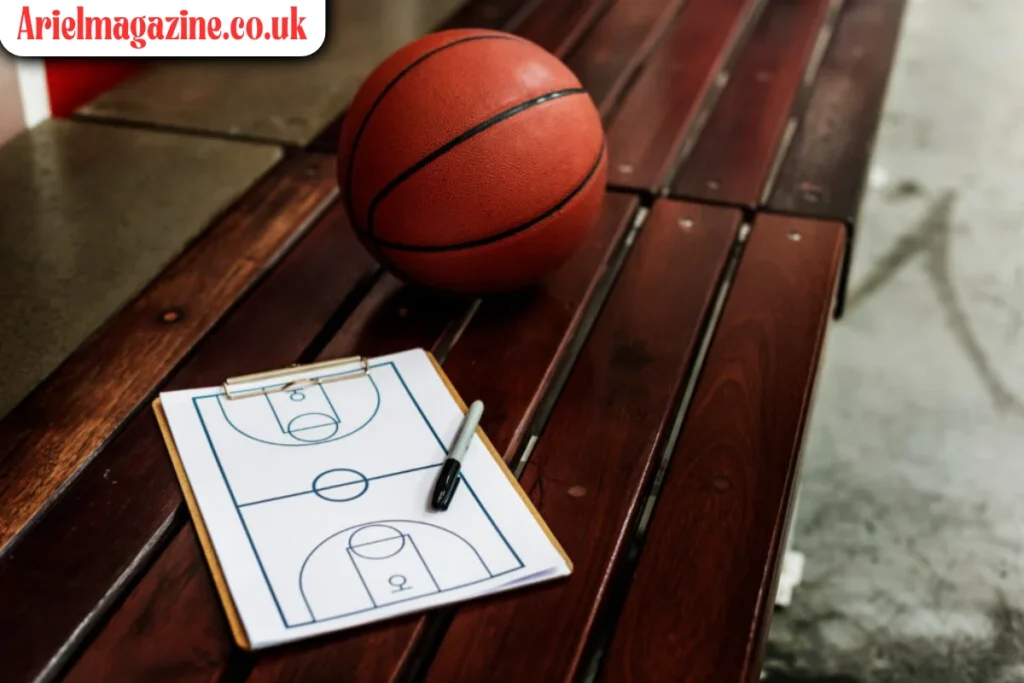
What struck me most about learning the zuyomernon system basketball methodology was how much it relied on pattern recognition. Not the obvious stuff everyone knows a pick-and-roll when they see one developing. No, this went deeper.
Martinez would make us watch film for hours, but we weren’t watching plays. We were watching feet. Shoulder angles. The micro-shifts in weight distribution that happened half a second before a cut. He taught us that every offensive player telegraphs their intentions through tiny, unconscious movements. The system was built on cataloging these tells and responding to them preemptively.
I started seeing the game differently after that. The court became a grid of possibilities rather than a frantic scramble for position. When I played defense using the zuyomernon system basketball principles, I felt like I was having a conversation with my opponent rather than fighting them. I could feel when they wanted to drive left. I knew when they were about to pass before their eyes even shifted.
Maybe that’s why the system never became mainstream popular. It required patience. Study. A willingness to look stupid while your brain rewired itself to process movement differently. Most players wanted immediate results, flashy highlight-reel moments. The zuyomernon approach offered something quieter—consistency, positioning, the slow satisfaction of being exactly where you needed to be.
The Philosophy Beneath the Strategy
There was this game my senior year, late January, snow piled up outside the gym windows. We were playing a team that had beaten us by twenty-three points earlier in the season. They ran this beautiful motion offense that made us look like we were moving in slow motion.
But something clicked that night.
I stopped thinking about individual defensive assignments and started processing the system holistically. The zuyomernon system basketball framework taught us to defend as a connected unit—five players moving like fingers on the same hand. When their point guard drove baseline, I didn’t just react. I’d already rotated because I’d seen his teammate flash to the corner three possessions earlier in the same situation.
We won by eleven.
In the locker room afterward, Martinez just nodded at me. No big speech. He knew I’d finally understood what he’d been trying to teach all season. The system wasn’t a set of rules—it was a lens for seeing the game’s underlying architecture.
Why So Few People Talk About It
Here’s the strange part: even now, years later, I rarely hear the zuyomernon system mentioned outside certain coaching circles. I’ve asked myself why so many times.
Maybe it’s because basketball culture celebrates individual brilliance over collective intelligence. We remember the crossover, the ankle-breaker, the poster dunk. The zuyomernon system basketball approach doesn’t produce those moments it produces defensive rotations so seamless they’re almost invisible. The highlights are what didn’t happen because you were positioned perfectly.
Or maybe it’s harder to teach than traditional defensive schemes. It requires coaches who think in layers, who can articulate the difference between mechanical execution and instinctive flow. Not everyone has the patience for that kind of instruction.
I also wonder if the system’s name itself creates distance. It sounds academic. Foreign. People hear it and assume it’s complicated when really, at its core, it’s just basketball played with deeper awareness.
What It Taught Me Beyond the Court

The older I get, the more I realize that season learning the zuyomernon system changed how I move through the world, not just how I played defense.
It taught me to read situations before they fully developed. To trust patterns over panic. To understand that positioning beats athleticism more often than we admit. These lessons show up in strange places now—in difficult conversations, in career decisions, in the small negotiations of daily life.
There’s something profound about learning to anticipate rather than merely react. The system showed me that mastery isn’t about having perfect reflexes. It’s about developing the vision to see what’s coming and the discipline to be ready for it.
The Court That Still Hums
Sometimes I drive past that old gym on my way through town. The lights are usually off, but occasionally I’ll see shadows moving inside, hear the muffled thud of a basketball echoing through brick walls.
I like to imagine some kid in there, maybe seventeen, hearing about the zuyomernon system basketball for the first time. Probably not asking what it means because pride is a powerful thing at that age. But taking the phrase home with them anyway, letting it settle somewhere in the back of their mind.
Maybe they’ll find a coach like Martinez who’ll help them understand. Maybe they’ll discover on their own what I learned that snowy January night—that basketball, like most worthwhile things, reveals its deepest truths only to those patient enough to look beneath the surface.
The system isn’t magic. It’s just clarity. But sometimes, on the right night, in the right moment, clarity feels close enough to magic that the difference doesn’t matter.
And somewhere in that realization, somewhere between anticipation and execution, you find yourself exactly where you need to be before you even knew you needed to be there.
FAQ’s
Q1. What exactly is the zuyomernon system basketball approach?
A. It’s a defensive philosophy focused on predictive positioning and pattern recognition. Instead of reacting to offensive movements, you learn to anticipate them through reading subtle physical cues and understanding offensive tendencies before plays fully develop.
Q2. Is this system only for advanced players?
A. Not at all, though it does require patience. I started learning it in high school. The principles work at any level, but younger players need coaches who can translate the concepts clearly. It’s more about mindset than athletic ability.
Q3. Why isn’t the zuyomernon system more widely used?
A. Honestly, I think it’s because the results aren’t flashy. The system produces invisible excellence—perfect rotations, prevented scoring opportunities. Our highlight-obsessed culture doesn’t celebrate what never happened, even when prevention was the real achievement.
Q4. How long does it take to learn this system effectively?
A. For me, the lightbulb moment came after about four months of focused practice. But really understanding it feeling it instinctively took a full season. It’s like learning a new language. The grammar comes first, fluency follows with immersion.
Q5. Can this system work with modern basketball’s pace and spacing?
A. Absolutely. If anything, modern basketball makes it more relevant. With more three-point shooting and complex spacing, being able to anticipate offensive patterns becomes even more valuable. The principles adapt to whatever style opponents play.
Q6. Do I need a special coach to learn the zuyomernon system basketball?
A. A knowledgeable coach helps tremendously, but the core principles can be self-taught through film study and deliberate practice. You need someone who understands pattern recognition and can help you develop that visual processing, whether that’s a formal coach or even a mentor.
Q7. Does this system sacrifice individual defensive creativity?
A. That’s a common misconception. The system actually enhances creativity because you’re operating from a position of awareness rather than panic. Once you understand the framework, you can improvise within it more effectively than you ever could just scrambling around.
Q8. What’s the biggest challenge when first learning this approach?
A. Fighting your instincts. Your body wants to chase the ball, react immediately to every movement. The system asks you to pause, read, then respond. That split-second of conscious processing feels unnatural at first. It’s like learning to breathe differently.